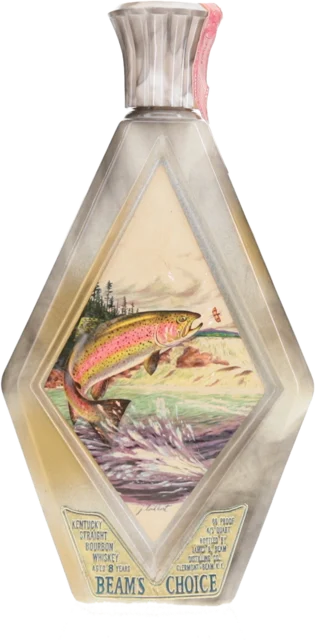
Collectible whiskey decanters — Jim Beam Regal China pieces in particular — don't have a single authoritative price. Based on observed sales, a bottle that clears around $80 on a curated platform might go for $30 at an estate sale or $140 at a licensed reseller. Understanding why that gap exists is the first skill every collector needs.

There are three distinct markets where decanters trade. Each has its own pricing logic, risk profile, and advantages. Knowing which one you're in at any given moment determines whether you're getting a deal or getting taken.


Where Decanters Actually Trade

01

Primary Markets

The most transparent and regulated channel. Prices here are publicly documented — which means they're the most reliable source of real comparable sales data (comps).

Primary market transactions leave a record. You can see what a specific piece actually sold for, not just what someone is asking.

Auction houses (Skinner, Morphy, Heritage) · Baxus · Established breweriana dealers · Reputable antique shops with provenance documentation
02

Secondary Underground Markets

This is where the real volume happens — and where both the best deals and the worst rip-offs live. Pricing is inconsistent and often based on relationships, who's in the room, or how motivated the seller is.

You can find serious bargains here. You can also overpay badly, or end up with a reproduction or damaged piece with no recourse.

Facebook collector groups · Reddit communities · Private collector networks · Flea markets · Estate sales · Swap meets and shows
03

Online Liquor Store Resellers

A unique category: licensed retailers in states with favorable resale laws (Ohio, Kentucky, and others) who legally sell vintage and collectible bottles. Transactions are clean, inventory is vetted, but prices are retail-marked-up and non-negotiable.

This is the safest channel for new collectors — but you'll pay a premium for that safety.

Licensed specialty retailers · Regional whiskey shops with vintage inventory · Some Total Wine rare sections · State-specific resale retailers
The Key Insight: A piece clearing around $80 on Baxus (primary) might go for $35–45 at a weekend estate sale (secondary underground) or $110–140 at a licensed reseller (retail) — these ranges are illustrative estimates based on observed market patterns, not guaranteed prices for any specific piece. The bottle is identical. The market you're in determines everything. Smart collectors learn to source from secondary markets and understand primary market pricing well enough to know a deal when they see one.

What Actually Determines a Decanter's Value

Once you understand where to trade, you need to understand what you're actually valuing. Collectible decanter prices are driven by six primary factors:

1. Fill Level

Most vintage Jim Beam decanters were filled with bourbon when issued and sealed. A full or near-full bottle is significantly more valuable than an empty one. The liquid inside is often undrinkable at this point — but its presence signals that the piece has been stored properly and never opened. Full or near-full adds a meaningful premium. Empty bottles are still collectible but trade at a steep discount.

2. Original Stopper & Seal

Many Regal China decanters used ceramic stoppers that are easy to lose or break. A piece with its original stopper intact — and especially with the original foil or wax seal unbroken — commands a strong premium. Missing stoppers are the single most common deduction you'll encounter.

3. Original Box & Documentation

The original display box, if present, can add roughly 30–60% to the value of a piece based on observed comps — though this varies significantly by series and condition. Boxes were often discarded, making boxed examples genuinely scarce. Any original paperwork, certificates of authenticity, or Jim Beam Bottle Club newsletters included with the piece add further value.

4. Condition

Ceramic decanters are vulnerable to chips, crazing (fine surface cracks from age), fading of hand-painted decoration, and kiln spots. Use a simple grading rubric:

5. Rarity & Series

Jim Beam produced over 1,500 unique decanter designs between 1955 and 1992, but production quantities varied enormously. Some series — like the early Executive Series or the Political Figures series — had limited runs and are genuinely scarce. Others, like common state bottles, were produced by the hundreds of thousands and are easy to find. Knowing the series matters more than knowing the piece.

6. Subject Matter & Demand

Collector crossover drives premium pricing. A Jim Beam decanter shaped like a classic car attracts both whiskey collectors and automotive memorabilia collectors. Political figure decanters attract political history collectors. Sports team decanters attract sports memorabilia collectors. The more collector communities overlap on a single piece, the higher the demand — and the price.


Common Mistakes New Collectors Make

Overpaying based on retail reseller prices

Licensed reseller prices are the ceiling, not the benchmark. Don't use them to estimate what you should pay at an estate sale or flea market. Those markets clear significantly lower.

Ignoring the stopper situation

A beautiful decanter with a replacement or missing stopper is worth a fraction of the same piece with its original. Always ask specifically about the stopper — and verify it's original to that model, not a generic replacement.

Treating all Jim Beam decanters as equivalent

The Regal China series spans nearly four decades and hundreds of distinct themes and series. A 1956 Executive Series piece and a 1984 common state bottle are both "Jim Beam decanters" but exist in entirely different price tiers. Learn the series before you commit.

Not checking eBay completed sales

eBay's completed and sold listings are free, public, and the most accessible source of real-world secondary market comp data available. Always filter for sold listings — not active listings, which reflect asking prices, not clearing prices. The gap between asking and sold is often substantial — frequently 50% or more on common pieces.

Assuming empty means worthless

Empty decanters still have collectible value, especially for rare series or excellent-condition pieces. They trade lower, but they're not worthless. For display collectors who don't care about the liquid, empty pieces represent the most attainable entry point in the market.


See These Principles Applied

Browse the Boozy Estate personal collection — attainable pieces with real provenance, tracked through Baxus.

View the Collection →